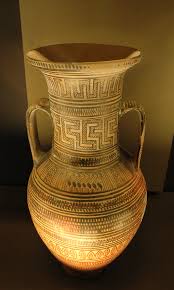
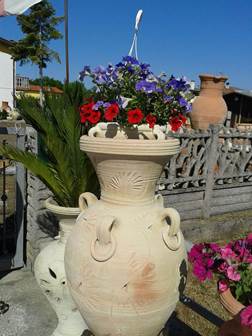
Amphora is a type of ceramic containers , usually with two handles and long neck , narrower than the rest of the container .
HISTORY:
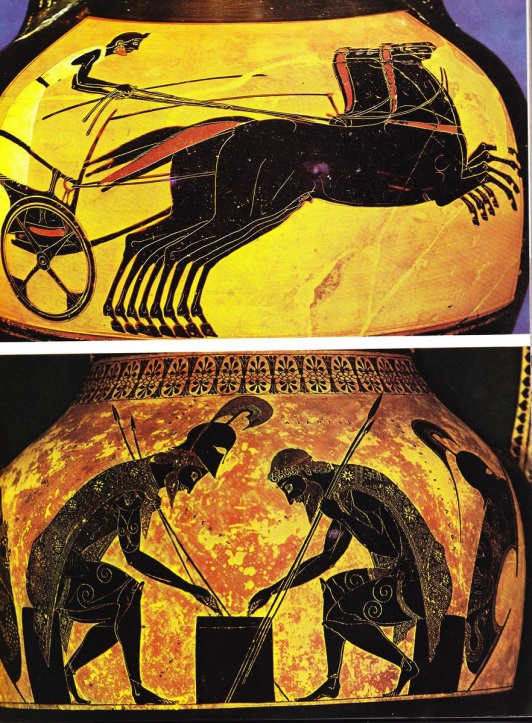
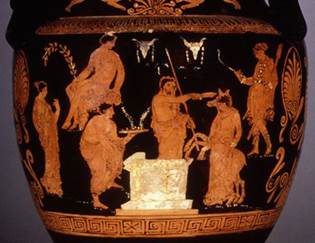
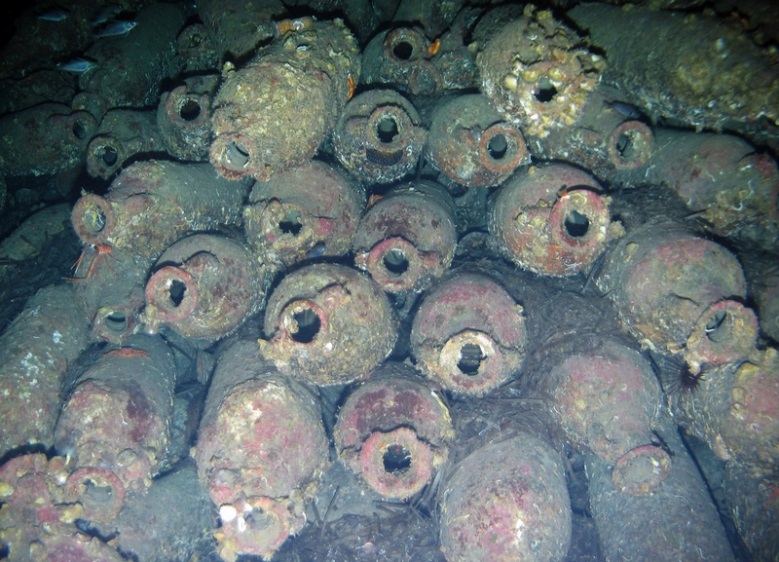
Origin of amphoras are dating back to ancient antiquity . The first Amphoras appeared on Lyban - Syrian coast in the 15th century BC . First amphoras were called black figures that appear around the 6.stor. B.C. in Athens . Just Athenians were masters of pottery and these amphoras were made of clay. The Athenians drew the molded amphoras earthen figures by special brushes.Amphora after firing perseve color but figures were black . In the figures show the gods and important battle . Them gradually began to capture everyday life . In short , from amphoras can be read as living at that time in Greece . Enjoyed great popularity not only in palaces but for ordinary people .Amphoras were used for storage of food , for example olive oil , wheat , wine and many others . From Athens have spread to other cities , such as Sparta , and even in Rome itself . In Egypt were inserted into the pyramids with Pharaoh . They were filled with wine and food to serve Pharaoh in the afterlife . Black figures amphoras were replaced by red figures amphoras, circa 530 BC. The design was the same, but the figures were painted other colors which after burning redder . To figure amphora confluent with color , moult were highlighted in a darker color . Red and black figur amphoras became the basis for today's modern amphoras . Amphoras found on the underwater level had great importance. Usually, they have been kept in shipwrecks . These amphoras may be thousands of years old . History amphoras stretches from the very ancient times, Antiquity , through the Middle Ages , which had great popularity , especially in Queens as decorative elements in palaces and extend to the present day , where we use them as a feast for the eyes , not only in gardens , but also in homes .